Our Work
What It Actually Looks Like
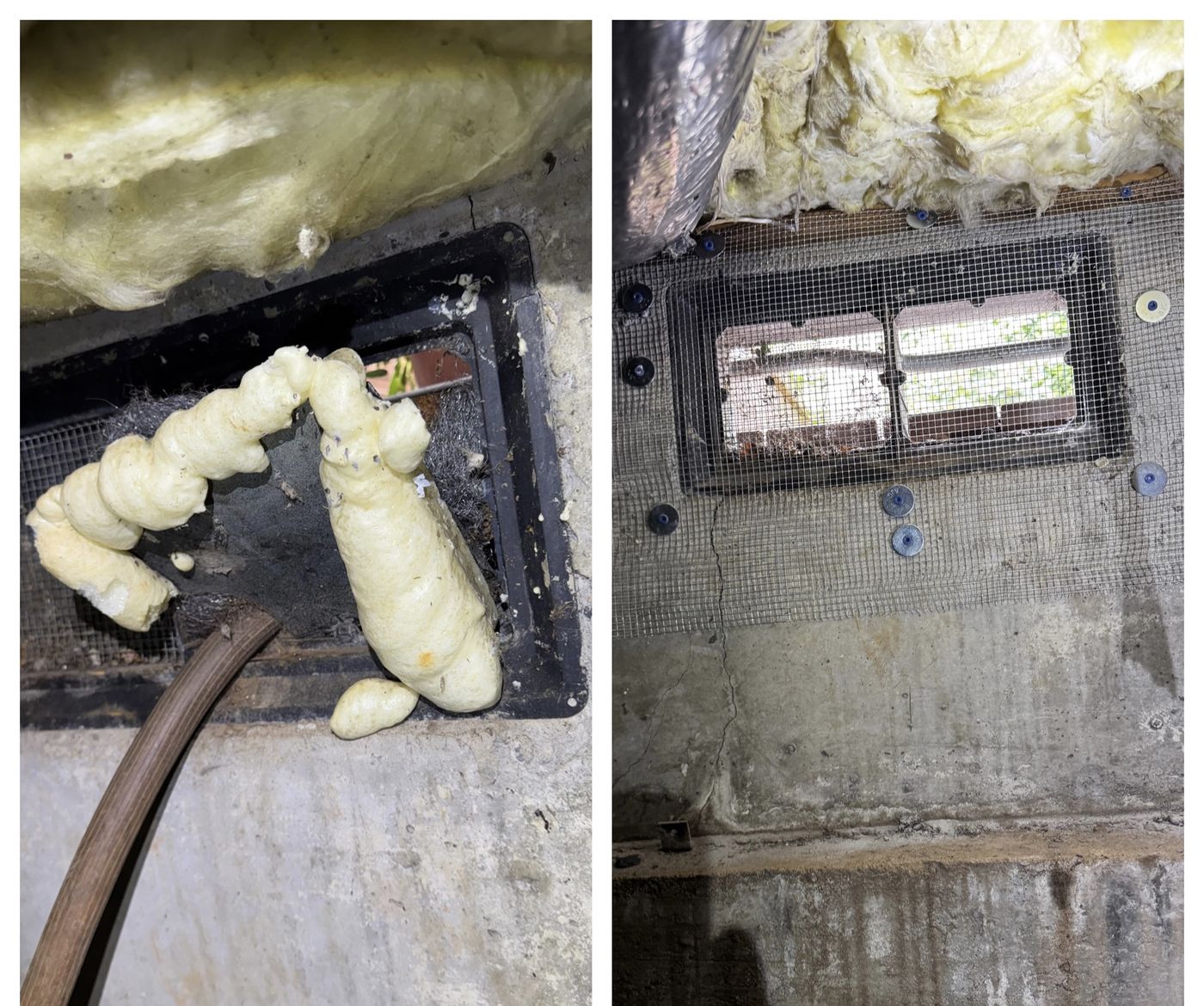
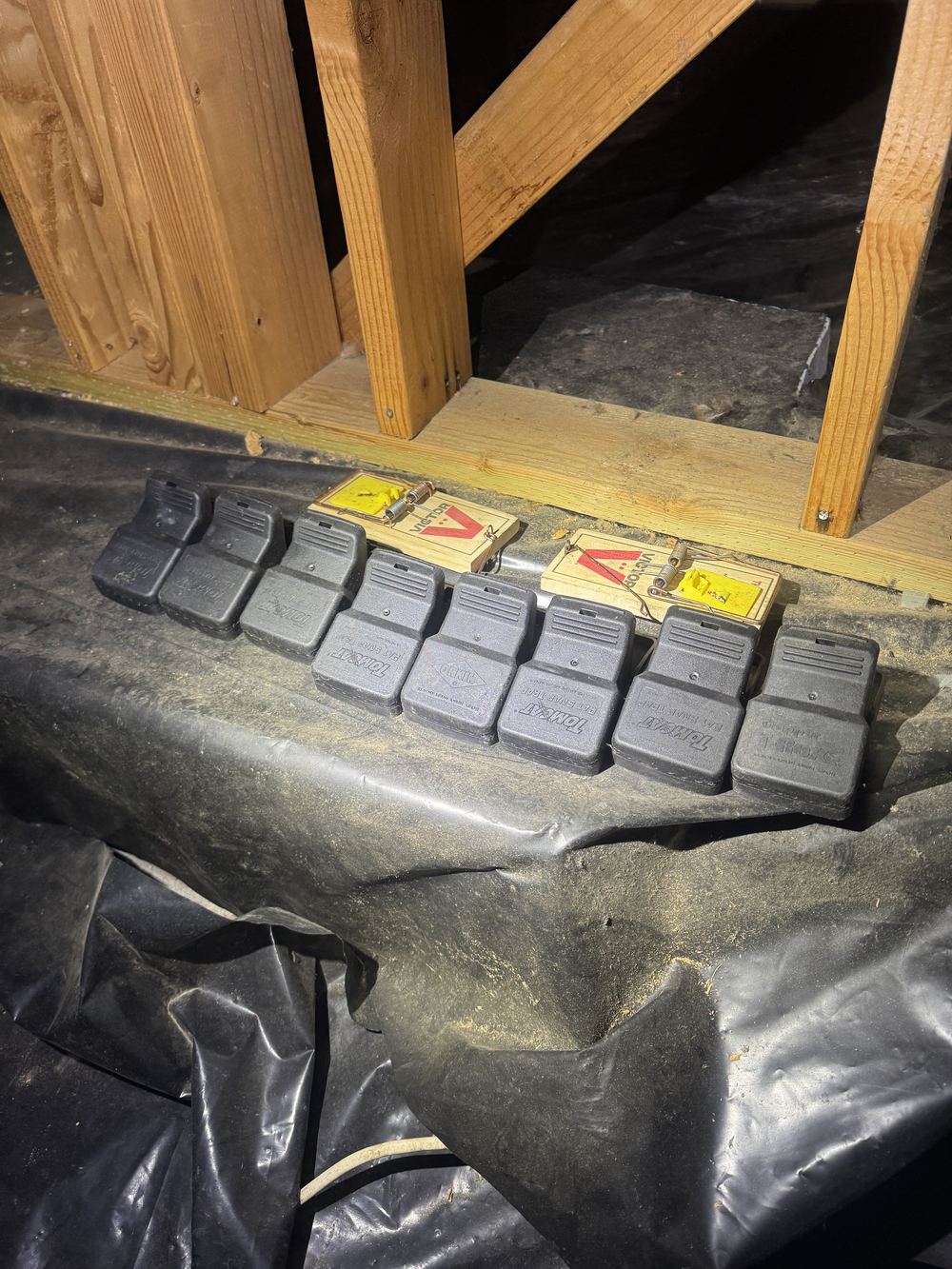
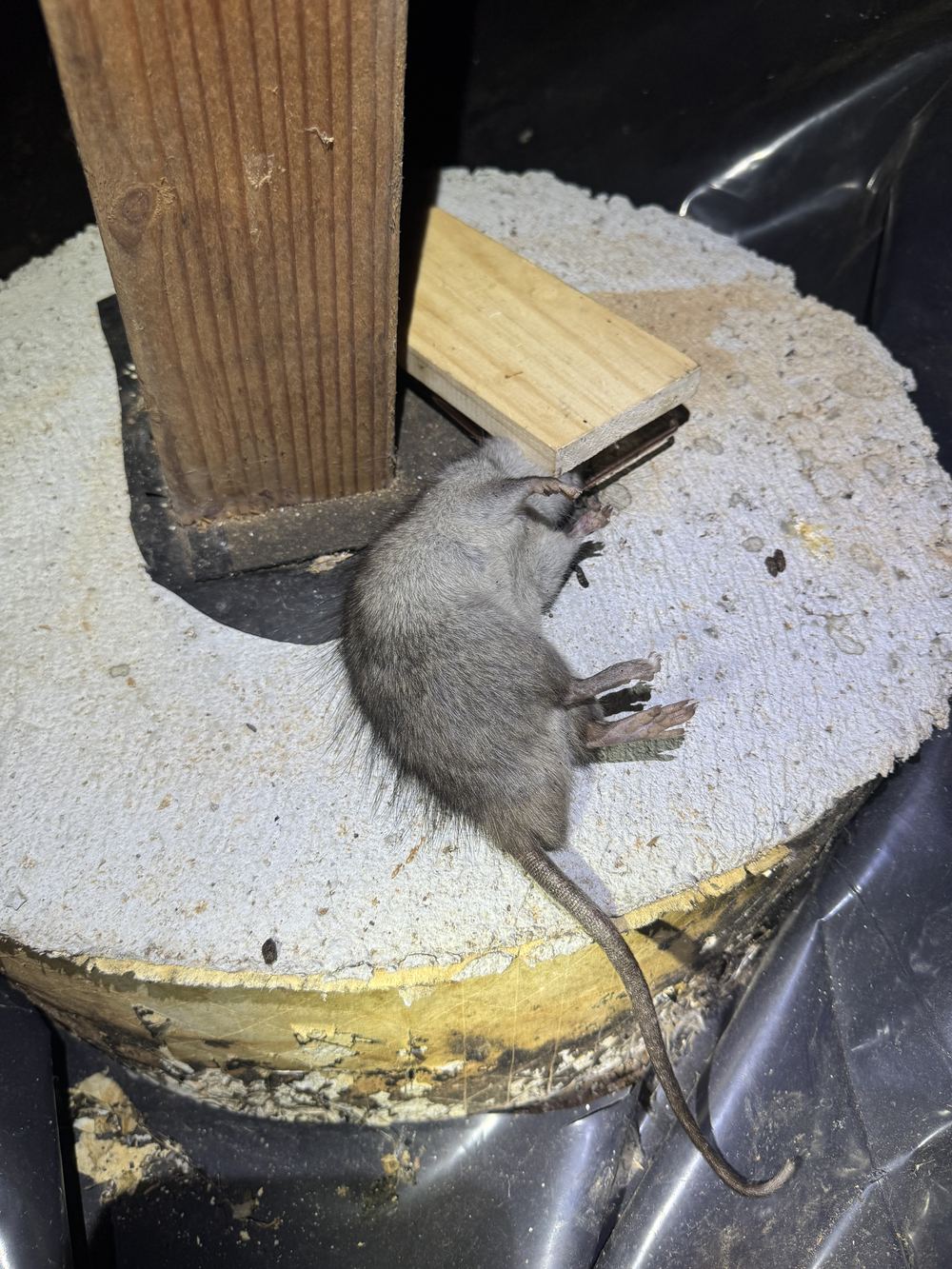
Scratching in the walls at night. Droppings in the crawlspace. Something gnawing where you can't see it. We remove rats with professional trapping, seal every entry point, and clean up what they left behind — no poison, ever.
Rats are nocturnal. Scurrying or scratching in walls, ceilings, or under floors after dark is the classic first sign.
Dark pellets about half an inch long, concentrated along walls, in the crawlspace, attic, garage, or under sinks.
Fresh chewing on wood, plastic, or wiring. Chewed electrical wiring is a fire hazard — don't ignore it.
A persistent ammonia-like smell from urine, or a dead-animal odor coming from a wall or crawlspace.
Rats reuse the same routes. Look for dark rub marks along baseboards, pipes, and joists where they travel.
Dogs and cats hear rats long before you do. Fixating on a wall, cabinet, or appliance is worth taking seriously.
Most pest control companies handle rats the same way: bait boxes, a monthly invoice, and a problem that never fully goes away. We do it differently, and the difference matters.
Poisoned rats die in your walls. Rodenticide doesn't drop a rat where it stands — it sends it somewhere dark to die. That means odor, flies, and a dead animal in a wall cavity or crawlspace you can't reach.
Poison travels up the food chain. Owls, hawks, and neighborhood pets that catch a poisoned rat get poisoned too. The Portland area's raptors take real losses from rodenticides every year — and none of it is necessary.
Poison doesn't fix how they got in. Bait kills some of the rats currently in your home. It does nothing about the gap under the garage door or the broken foundation vent that let them in — so the next rats walk right in behind them. That's why bait programs run forever.
Our approach: trap, remove, seal, sanitize. Strategic snap trapping removes the population. Full exclusion closes every entry point permanently. Cleanup removes the contamination and scent trails that attract the next generation. Solved — not managed.
We inspect from the roofline to the crawlspace: entry points, species, activity level, and damage. You get a straight diagnosis and a written plan — no charge, no pressure.
Professional traps placed directly on active runways — not guesswork. We monitor and reset on scheduled visits until the population is cleared.
We don't seal until we've confirmed 2 consecutive visits with no activity. Sealing too early traps rats inside your walls — it's the most common shortcut in this industry, and we don't take it.
Every entry point sealed with exclusion-grade materials. Droppings and nesting removed, contaminated areas HEPA-vacuumed and treated with hospital-grade disinfectant.
Available on request. We'll come back, walk the property, and confirm everything is still sealed — free.
The Portland metro deals with two rat species, and they break into homes differently. Norway rats live at ground level — they burrow along foundations and work their way into crawlspaces through damaged vents, gaps around pipes, and access doors that don't seal. Roof rats are climbers — they travel tree limbs and power lines to reach your roofline, then enter through attic vents, eave gaps, and anywhere two rooflines meet.
Our mild, wet climate means rats stay active year-round, and the fall temperature drop pushes them indoors hard. Older housing stock with original foundation vents, mature trees touching rooflines, backyard chickens, compost bins, and fruit trees all raise the odds. None of that means you did anything wrong — it means Portland is good rat habitat, and homes here need to be sealed like it.
That's the local reality our inspections are built around: we know where rats get into homes in this area because it's the only kind of home we work on.
Most rat jobs take one to three weeks depending on the size of the population and how many entry points the home has. We follow a strict protocol: traps stay active and monitored until we've confirmed 2 consecutive visits with no activity, and only then do we seal entry points. Sealing too early traps rats inside your walls — rushing this step is the most common mistake in rat control.
No. We never use rodenticides. Poisoned rats crawl into walls and crawlspaces to die, leaving odor and flies. Poison also moves up the food chain to owls, hawks, and pets, and it does nothing about how the rats got in. We solve rat problems with strategic trapping and permanent exclusion instead.
A rat can squeeze through a gap the size of a quarter. Common entry points in Portland homes are foundation vents with damaged screens, gaps where pipes and wires enter the home, crawlspace access doors, garage door gaps, and rooflines — roof rats climb trees and power lines to reach attic vents and eave gaps. Our inspection maps every entry point before any work starts.
It depends on the size of the infestation, how many entry points need sealing, and whether the attic or crawlspace needs cleanup. That's why the inspection is free — we assess the actual situation and give you a straight answer and a written price before any work begins. No pressure, no obligation.
Yes. Rats gnaw constantly, and chewed electrical wiring is a real fire hazard. Their droppings and urine contaminate insulation and can carry pathogens, which is why cleanup and sanitation matter as much as removal. The longer rats are active in a home, the more damage accumulates — it's worth addressing at the first signs.
Rats don't leave on their own, and the damage compounds. Get a free inspection this week.
(503) 688-4772